
Writing
To LINQ or Not to LINQ
Repeated work can hide inside a short LINQ query. A customer-filtering benchmark separates string conversions, lookup choices, iteration and changed behavior.
Topic
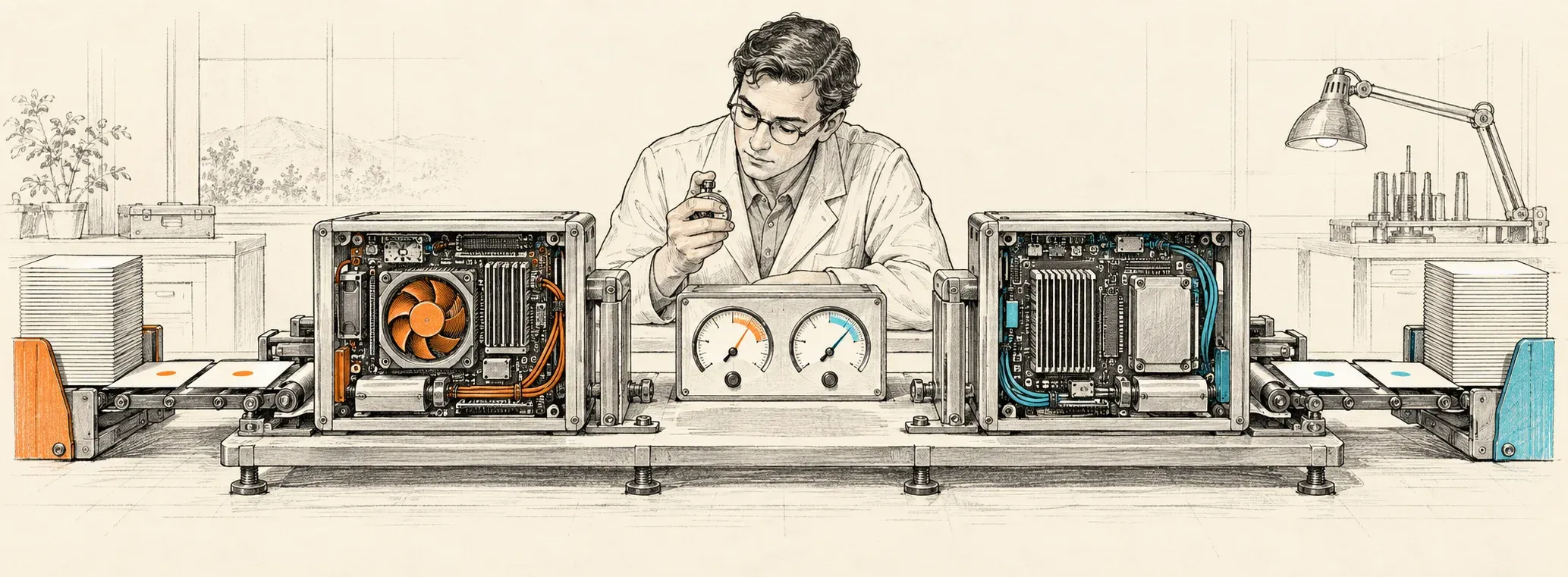
Measuring an operation under controlled conditions and interpreting elapsed time, allocations, and other resource costs in light of the workload and implementations compared.
12 pages
Writing
Repeated work can hide inside a short LINQ query. A customer-filtering benchmark separates string conversions, lookup choices, iteration and changed behavior.

Writing
A one-to-many map must enforce unique values and return a key from a value. Shared tests and four implementations show how correctness shapes a benchmark.
Writing
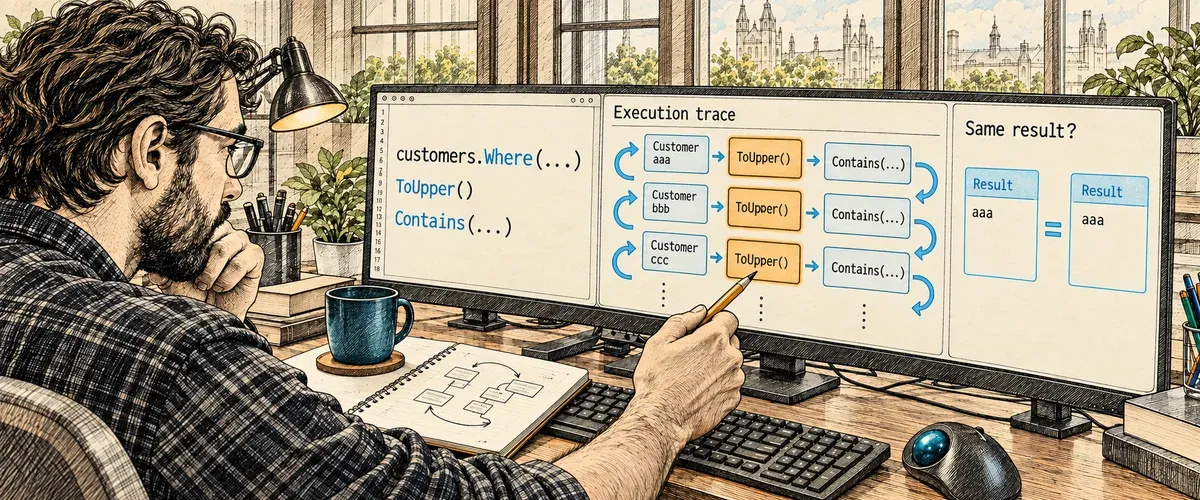
LINQ rewrites can add work while removing repetition. Customer filters expose query projections, lookup choices and why benchmarks must compare equal results.

Writing
A terminal request delegate exposes the work behind an ASP.NET Core endpoint. A movie-service experiment compares a narrow handler with the controller pipeline.
Writing
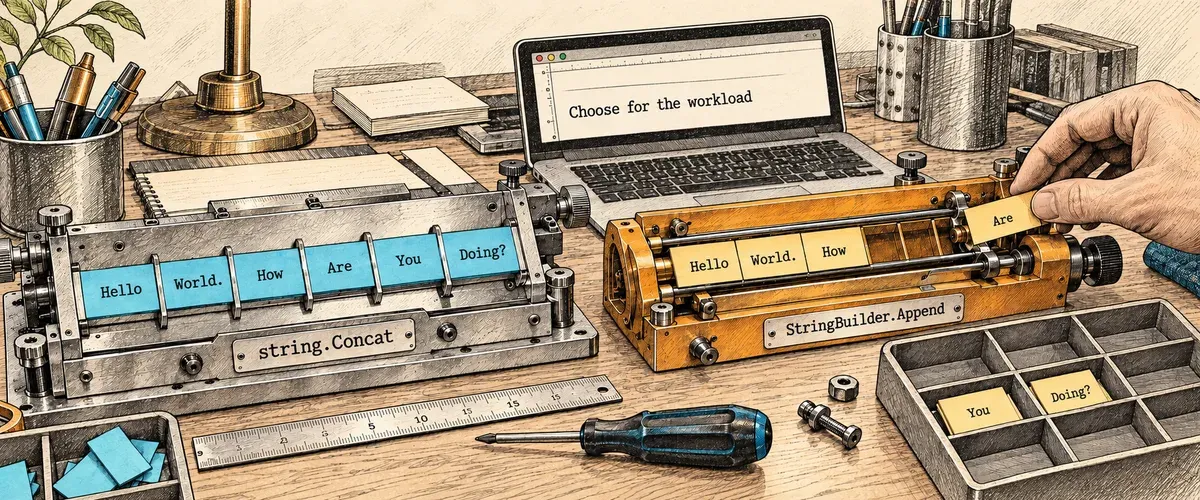
StringBuilder suits growing results, but can cost more for fixed concatenation. Compiler output, allocations and benchmark checks explain when to choose it.

Writing
The type a foreach loop sees determines its enumeration path. Array lowering, list enumerators and yield state machines explain the work behind the syntax.

Writing
Async streams let callers process database rows before the full result exists. An async iterator combines await and yield return, keeping its reader open during enumeration.

Writing
A benchmark tests whether a change improves the same operation. BenchmarkDotNet makes input choice, setup, timing and allocation costs visible for .NET code.

Writing
HttpWebRequest callbacks and Task.Factory.FromAsync support asynchronous GET and POST calls, with five approaches compared for collecting concurrent responses.
Writing
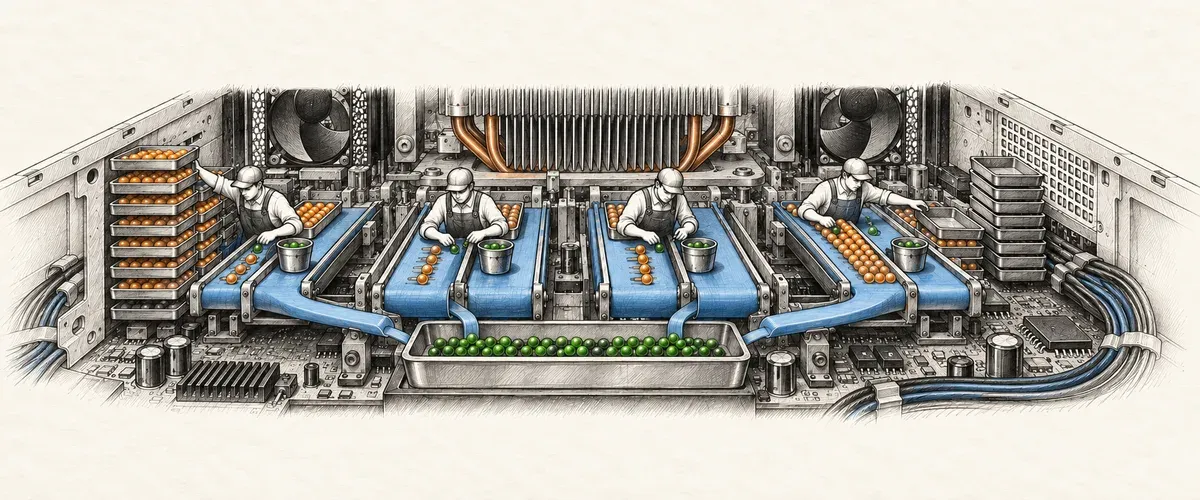
Data parallelism distributes compute-bound work across cores. Prime-counting examples compare PLINQ, Parallel.For, thread-local state, partitioning, and measured timings.

Writing
Flash Mobile performance comparisons need equivalent workloads. A 2010 critique separates shared bandwidth, extra downloads, and execution costs from unsupported conclusions.

Writing
HTML5 video playback varied across browsers in 2010. Tests compare HD playback, CPU use, codec support, and full-screen behavior with Flash and native players.