
The Configuration Provider: Roles and Responsibilities
A Configuration Provider hides the source and returns validated, typed settings. Useful exceptions and composed settings providers keep configuration rules in one place.

Operationalized guidance
Four pillars covering how code is structured, written, verified, and how it fails. Each rule is specific enough to apply the same way twice.
Programming With Intent began as a long-running video series. The chapters below carry that material as text, with worked examples in Python and C#.
Guidance is written to be applied rather than admired. Most rules exist because a specific class of defect kept recurring, and the chapter says which one.
Recurring phrases run through the chapters, and their canonical meanings live in the Aphorism Glossary. Each definition lists the chapters that invoke it.
One of the four pillars sits in the top-level navigation in its own right. Verification with Intent isAcceptance Testing, promoted because functional acceptance testing at the boundary is the practice that earns confidence to ship. Its chapters live there rather than being copied here.

Layers, boundaries, and where responsibility belongs.

Classes, methods, naming, and the shape of everyday code.

Functional acceptance testing at the boundary. Proving the thing does what it claims.

Failure as a designed path rather than an afterthought.
Factories, configuration and service boundaries explained through their responsibilities and worked examples. Browse all design pattern articles.
A Configuration Provider hides the source and returns validated, typed settings. Useful exceptions and composed settings providers keep configuration rules in one place.

Factory Method lets consumer subclasses choose dependencies through an overridable creation hook. C# examples show its two class families and distinguish it from a separate Factory.

A Factory selects and constructs a concrete descendant while callers program to an interface through the base class's public contract. C# thumbnailers show selection and polymorphic dispatch.
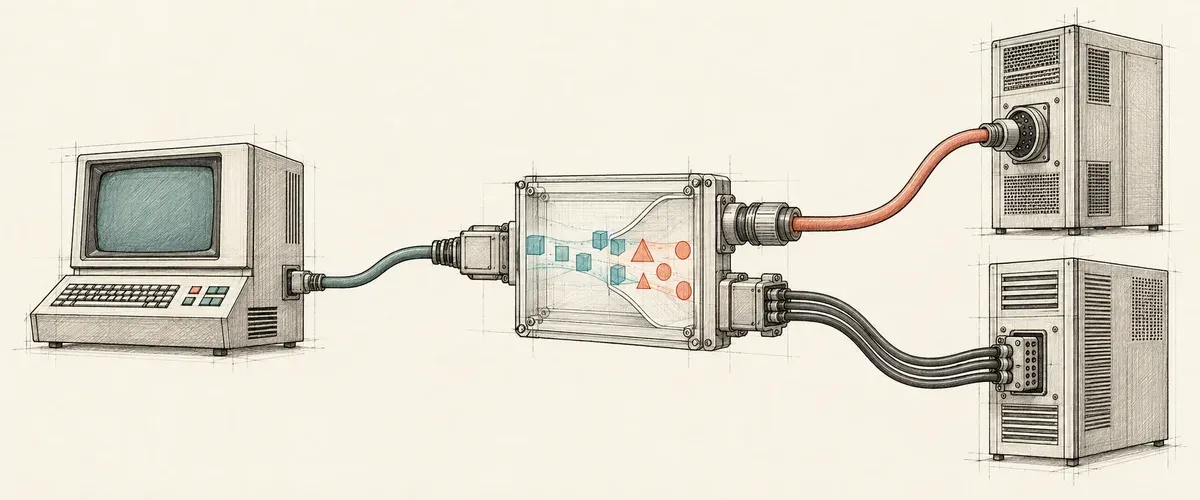
A Gateway presents business operations, translates service models and transforms failures into domain exceptions, keeping external service details behind one boundary.
21 topics. Chapter numbers are deliberately absent, because the two language families number their chapters independently.
Method contracts, exception design, and logging in one shared reading sequence.
Marked language-independent on the assumption this is the GoF pattern. If the chapter is about Python's @ decorator syntax, scope should be 'python'.
Examples are C# today.